
Farm inventory management refers to the systematic tracking, control, and optimization of all inputs and outputs within agricultural operations, from seeds and fertilizers to livestock feed and machinery parts. In a modern production context, it goes beyond simple stockkeeping, effective inventory management ensures that resources are available when needed, reduces waste, and supports data-driven decisions across the farm.
Inefficiencies in inventory often quietly erode profit margins. With USDA estimating that 30–40 percent of food produced is lost or wasted at different stages of the supply chain, it is clear that poor inventory practices significantly impact farm revenue. Stockouts can halt production, forcing costly last-minute purchases, while overstocking ties up capital in items that may expire or degrade before use. Similarly, expired inputs not only represent wasted money but can also affect crop yields and livestock health.
Operational control over inventory directly influences profitability. By understanding exactly what is on hand, when it will be needed, and how much is optimal, farm managers can align purchasing decisions with production schedules and market demands. This balance between availability and cost efficiency transforms inventory from a basic administrative task into a strategic profit lever.
This guide will explore the full spectrum of farm inventory management, covering essential systems, practical tracking methods, optimization strategies, and the latest digital tools that empower farmers to maximize efficiency and profitability.
What Is Farm Inventory Management?
Farm inventory management focuses on operational control, tracking all resources to ensure production efficiency and profitability. Unlike accounting inventory, which records the financial value of items, farm inventory planning ensures the right inputs and outputs are available at the right time. This distinction is crucial for optimizing production and protecting margins.
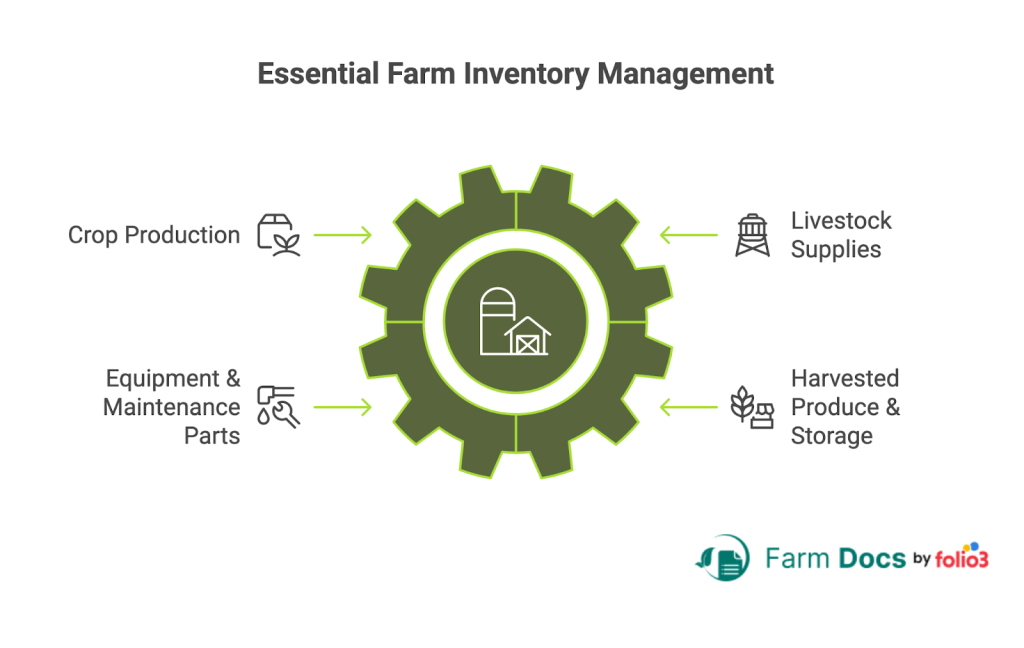
Categories of Farm Inventory
- Inputs: Seeds, fertilizers, and chemicals essential for planting and crop protection
- Feed and Livestock Supplies: Grains, silage, and other animal nutrition materials
- Equipment Parts and Consumables: Replacement parts, tools, and maintenance materials
- Harvested Commodities in Storage: Crops or products ready for sale or processing
Many farms struggle not because they lack inventory records, but because they lack a structured approach to using them. The difference between simply tracking stock and actively planning around it can determine whether a farm operates efficiently or constantly reacts to shortages. This brings us to a critical distinction in modern operations.
Reactive vs Proactive Inventory Management
- Reactive Tracking: Recording usage only after items are consumed or found missing. This method often leads to stockouts, overstocking, and operational inefficiencies.
- Proactive Management: Structured systems anticipate needs, schedule purchases, and maintain optimal stock levels. This approach reduces waste, prevents disruptions, and supports consistent production.
Why Structured Inventory Systems Outperform Manual Methods
Structured inventory systems outperform manual methods by providing real-time visibility of inventory levels, allowing farm managers to know exactly what resources are available at any given time. This highlights the importance of farm inventory management, as well-organized systems give farms the insight needed to make smarter decisions and prevent costly inefficiencies. By integrating technology into farm inventory management, growers can generate data-driven insights that support better decision-making, from purchasing schedules to production planning.
An advanced farm inventory management software also helps detect trends, forecast demand, and prevent losses before they occur, reducing waste and operational disruptions. Compared to manual tracking, these structured systems lower costs, improve efficiency, and enhance overall profitability, demonstrating why farm inventory planning and management is a critical component of modern agricultural operations.
Types of Farm Inventory Growers Must Track
Effective farm inventory planning requires growers to clearly categorize everything used and produced on the farm. Without structured tracking, farms face production delays, excess capital tied up in unused supplies, and compliance risks. Proper categorization improves operational control, strengthens traceability, and protects long term profitability.
Crop Production Inputs
Crop production inputs are central to farm inventory management because they directly influence yield and timing. Even small miscalculations can delay planting or reduce output.
Core inputs include:
- Seeds for each crop cycle and variety
- Fertilizers used for soil nutrient management
- Pesticides including herbicides and fungicides
- Irrigation supplies such as pipes, pumps, and drip lines
When these inputs are not tracked systematically, farms experience stockouts during peak season or overstock materials that expire before use. Structured farm inventory management like in case of fresh produce inventory management ensures accurate forecasting and purchasing decisions.
Livestock Supplies
Livestock operations require continuous access to essential supplies. Farm inventory planning in this category supports both animal health and production stability.
Common livestock supplies include:
- Feed and grain rations
- Vaccines and veterinary products
- Nutritional supplements
- Bedding materials for hygiene
Failure to track these items can compromise herd health and create regulatory exposure. Proper documentation also supports compliance and traceability, especially for farms selling into commercial markets.
Equipment and Maintenance Parts
Machinery downtime can quickly disrupt farm productivity. Farm inventory management helps prevent operational interruptions by maintaining visibility over:
- Spare parts for tractors and harvesters
- Fuel reserves
- Lubricants and maintenance consumables
Reactive purchasing often increases costs. Proactive tracking improves operational control and reduces emergency repairs.
Harvested Produce and Storage
Post harvest inventory requires equal attention. Grain bins, cold storage units, and perishable products must be monitored closely to prevent spoilage and revenue loss. Categorized storage tracking strengthens compliance reporting and preserves profitability through better rotation and quality control.
Building an Effective Farm Inventory System
Creating a reliable farm inventory system is essential for operational control and long-term profitability. A structured system ensures that every input, output, and storage item is accounted for, reducing waste, preventing stockouts, and improving decision-making. The key is not complexity, but consistency. Farms that maintain clear processes for tracking, auditing, and updating inventory experience smoother operations and higher financial performance.
Standardizing Inventory Categories
The foundation of any effective farm inventory system is clear categorization. All items should have consistent naming conventions, units of measurement, and batch tracking where applicable. Standardized categories help prevent confusion and allow managers to quickly locate and assess stock levels.
Key practices include:
- Using uniform names across all records for seeds, fertilizers, feed, and chemicals
- Tracking batches or lot numbers to monitor usage and expiration
- Maintaining unit consistency to compare quantities accurately
Standardization simplifies reporting and ensures farm inventory management remains precise even as operations scale.
Establishing Reorder Points
Reorder points define the minimum stock levels that trigger new orders. These thresholds act as a safety net to prevent stockouts while avoiding excessive inventory accumulation.
Best practices include:
- Calculating average consumption rates for each item
- Setting buffer thresholds to account for seasonal variability
- Monitoring trends to adjust reorder points as conditions change
Properly implemented reorder points allow farms to maintain operational continuity and protect profitability.
Implementing FIFO and FEFO Methods
Inventory rotation methods ensure that materials are used efficiently and losses are minimized. First In, First Out (FIFO) prioritizes older stock to reduce spoilage, while First Expire, First Out (FEFO) focuses on using items before they reach their expiration.
Benefits of FIFO and FEFO:
- Minimizes expired inputs and spoiled feed
- Reduces financial loss from wasted materials
- Improves compliance with food safety and quality regulations
These methods form a critical part of proactive farm inventory management.
Assigning Responsibility
Clear ownership of inventory records ensures accountability. Each category or storage area should have a designated person responsible for updating stock levels, noting usage, and reporting discrepancies.
Responsibilities should include:
- Recording transactions immediately after use
- Communicating shortages or surplus to managers
- Following standardized procedures consistently
Ownership prevents errors and strengthens operational control.
Regular Audits and Cycle Counts
Scheduled audits and cycle counts verify that records match actual stock. These checks can be conducted monthly or seasonally, depending on the farm’s size and inventory turnover.
Key practices include:
- Comparing physical counts with system data
- Identifying discrepancies and adjusting records
- Reviewing trends to improve forecasting
Consistency in auditing ensures the reliability of the farm inventory management system. It is more important than complexity, as a simple system followed rigorously outperforms a complicated system executed inconsistently.
Best Practices Checklist for Growers
Implementing farm inventory planning effectively requires consistent processes and practical habits. The following checklist summarizes actionable steps that growers can take to maintain operational control, reduce waste, and protect profitability.
- Categorize Inventory Clearly: Organize all inputs, livestock supplies, equipment parts, and harvested produce into consistent categories. Clear naming, unit standardization, and batch tracking improve accuracy and reporting.
- Set Reorder Thresholds: Establish minimum stock levels and buffer thresholds for all critical items. Reorder points prevent stockouts and reduce unnecessary overstocking.
- Conduct Regular Audits: Perform monthly or seasonal inventory audits and cycle counts to verify that records match physical stock. This ensures data reliability and identifies discrepancies early.
- Use Digital Tracking: Implement farm inventory management tools or software to maintain real-time visibility, reduce errors, and enable data-driven decisions.
- Review Seasonal Forecasts: Incorporate weather patterns, historical consumption trends, and seasonal variability into inventory planning. Proactive forecasting prevents emergency purchases at higher costs.
- Align Inventory Planning with Production Goals: Connect stock levels to crop calendars and livestock schedules to ensure inputs are available at critical times. Proper alignment supports operational efficiency and profitability.
By following this checklist, growers can simplify complex operations, maintain consistent oversight, and strengthen farm inventory management as a strategic tool for sustainable success.
Forecasting & Demand Planning for Smarter Stock Control
Accurate forecasting and demand planning are critical components of effective farm inventory management. By analyzing historical usage trends, farm managers can anticipate future needs and align stock levels with production schedules. This proactive approach minimizes waste, ensures operational continuity, and enhances overall profitability.
Using Historical Usage Trends
Historical data provides insight into seasonal consumption patterns and long-term resource needs. Reviewing past usage of seeds, fertilizers, feed, and other inputs helps predict future demand more accurately. Farm inventory management systems that capture these trends enable managers to plan purchases efficiently and avoid last-minute shortages.
Linking Production Plans to Input Requirements
Inventory planning should be directly tied to production goals. Understanding the inputs required for each crop cycle or livestock operation ensures that resources are available when needed. This alignment reduces idle stock, prevents overstocking, and maintains operational control.
Planning for Weather Variability
Weather changes can dramatically affect planting schedules, crop growth, and feed requirements. By incorporating seasonal forecasts into inventory planning, farms can adjust stock levels to account for delays or increased demand. Proactive farm inventory management reduces the risk of emergency purchases at premium prices caused by unexpected weather events.
Aligning Inventory with Crop Calendars
Connecting inventory management to crop and production calendars ensures that all necessary inputs are available at critical stages. From planting and fertilization to harvest, precise stock control keeps operations smooth and supports higher yields.
By integrating historical trends, production requirements, and seasonal variability, farms can improve forecasting accuracy, maintain optimal stock levels, and reduce operational risk. Smart demand planning strengthens farm inventory management, minimizes costs, and protects profitability over the long term.
Financial Impact of Optimized Farm Inventory Management
Optimized farm inventory management has a direct and measurable effect on farm finances. Beyond operational efficiency, structured inventory tracking improves cash positioning, reduces unnecessary expenses, and strengthens long term profitability. When inventory is monitored systematically, financial decisions become more precise and predictable.
Reducing Capital Tied Up in Excess Stock
Excess inventory locks working capital into inputs that may not be used for months. Fertilizers, chemicals, feed, and spare parts sitting in storage represent money that cannot be invested elsewhere in the operation. Effective farm inventory management establishes appropriate stock thresholds, preventing over purchasing and freeing capital for expansion, equipment upgrades, or debt reduction.
Preventing Loss from Waste and Expiration
Expired chemicals, spoiled feed, and improperly stored harvested commodities lead to avoidable financial loss. Poor rotation practices and inaccurate tracking compound these issues over time. Structured farm inventory management supports expiration monitoring and usage sequencing, minimizing waste and protecting profitability.
Improving Cash Flow Visibility
Accurate inventory records provide clearer insight into upcoming purchasing needs. This visibility allows farm managers to plan expenditures in alignment with revenue cycles, improving operational control over cash flow. Rather than reacting to unexpected shortages, farms can schedule purchases strategically and avoid price spikes during peak demand periods.
Supporting Lender and Investor Reporting
Detailed inventory records strengthen financial reporting and transparency. Lenders and investors often review inventory levels as part of risk assessments and cost analysis. Reliable documentation demonstrates disciplined management practices and supports stronger financial credibility.
Connecting Inventory Tracking to Cost of Production Analysis
Inventory data plays a critical role in calculating true cost of production. Tracking input usage across crop cycles and livestock operations allows farms to evaluate margins more accurately. By linking inventory tracking to financial metrics, farm inventory management becomes a strategic tool for informed pricing, budgeting, and long term planning.
How FarmDocs Supports Smarter Farm Inventory Management
FarmDocs is a digital farm management platform designed to streamline and optimize farm inventory management. By centralizing workflows and providing actionable data, it helps growers maintain operational control, reduce waste, and make more informed decisions throughout the growing cycle.
Features:
- Real Time Inventory Tracking
- Automated Stock Alerts
- Batch and Lot Traceability
- Usage Analytics & Forecasting
- Integration with Procurement & Accounting
- Mobile Field Data Entry
With these capabilities, FarmDocs provides data-driven visibility that reduces waste, improves purchasing accuracy, and supports operational efficiency across all farm operations. Structured farm inventory management becomes easier to implement and more effective, helping farms maximize profitability and maintain consistent control over resources.
Conclusion
Structured farm inventory management is more than a routine task; it is a strategic tool that directly impacts efficiency and profitability. By moving away from spreadsheets and adopting systematic tracking methods, farms gain real-time visibility, reduce waste, and optimize resource allocation. Effective inventory control ensures that inputs, equipment, and harvested products are managed proactively, preventing costly shortages and overstocking. Over time, farms that prioritize structured inventory systems achieve a competitive advantage, as operational consistency translates into higher yields, lower costs, and stronger financial performance. Turning inventory into a well-managed asset allows growers to make informed decisions, plan accurately for production cycles, and maintain control over their operations, ultimately supporting sustainable growth and long-term profitability.
FAQs
What Is Farm Inventory Management?
Farm inventory management is the process of systematically tracking, organizing, and optimizing all resources on a farm, including inputs, livestock supplies, equipment, and harvested commodities. Unlike accounting-focused inventory, it emphasizes operational control, ensuring that the right materials are available at the right time to support efficient production and profitability.
What Are the Methods of Farm Inventory?
Common methods of farm inventory management include manual record-keeping, digital tracking systems, and structured rotation approaches such as FIFO (First In, First Out) and FEFO (First Expire, First Out). Each method aims to maintain accurate stock levels, prevent waste, and enhance operational control. Proactive systems using technology typically outperform manual methods by providing real-time visibility and data-driven insights.
What Are the 5 Steps of Inventory Management?
Effective farm inventory management generally follows five key steps: categorizing all inventory items clearly, establishing reorder points, implementing rotation methods like FIFO or FEFO, assigning responsibility for maintaining records, and conducting regular audits or cycle counts. Following these steps consistently helps farms reduce losses, improve efficiency, and support long-term profitability.
How Often Should Farm Inventory Be Audited?
The frequency of audits depends on farm size, inventory turnover, and operational complexity. Many farms perform monthly or seasonal cycle counts to ensure records match physical stock. Regular audits help identify discrepancies early, prevent stockouts or overstocking, and maintain accurate farm inventory management for both operational efficiency and financial planning.